INVESTMENT INSIGHT The strongest property investments combine proven demand, verified ownership, disciplined pricing, durable construction and a credible exit plan. Location alone is not an investment strategy.
Real estate investment in Nigeria is often discussed in terms of rising land prices or the next fast-growing neighbourhood. Yet long-term performance depends on considerably more: what is being bought, who will occupy it, the quality of its construction, the cost of owning it and the investor’s ability to exit when needed.
For individuals, corporate investors and Nigerians in the diaspora, property can serve different purposes—recurring income, capital preservation, future development or portfolio diversification. The right opportunity is therefore not necessarily the most expensive building or the cheapest plot. It is the asset whose risks and cash flows best match a defined objective.
Nigeria continues to present property opportunities, but conditions are selective. PwC’s 2026 economic outlook identifies ongoing real estate demand, while Knight Frank’s Africa Report 2026/27 highlights affordability pressures and growing attention to property efficiency. These trends favour careful asset selection over speculative buying.
1. Begin With an Investment Thesis, Not a Property Advert
Before viewing an estate brochure or committing to a payment plan, decide exactly how the investment will create value. A well-defined thesis should address the intended holding period, the target tenant or buyer, the required cash yield, acceptable construction exposure and expected method of exit.
Three broad objectives usually shape property investment: income from rents or operating activities; capital growth realised through eventual resale; and development profit created by improving land or delivering a completed building. The same property rarely maximises all three at once.
For example, a completed apartment in an established rental neighbourhood may offer earlier income and lower construction exposure. A vacant plot in a growth corridor may carry less immediate operating work but provide no rental cash flow. An off-plan unit may offer staged payments, yet its economics remain exposed to the developer’s delivery and the market at completion.
2. Six Real Estate Investment Strategies in Nigeria
Buy-to-let residential properties
Completed apartments and houses can generate recurring rental income. Investors should assess actual achievable rents, tenant affordability, vacancy, property-management costs, estate charges and future refurbishment. The key is sustainable net income rather than a headline rent estimate.
Off-plan apartments and new developments
Purchasing before completion can provide access to new stock and phased payments, but capital is committed before the finished asset can be inspected. Developer credentials, title, planning approvals, funding capacity, build programme and contractual remedies are essential. For a fuller explanation of how this model works, see Realistic Projects’ existing guide to off-plan developments.
Land acquisition and long-term land banking
Land may benefit from future urban expansion or infrastructure, but it generally creates no operating income while held. Investors must evaluate title quality, permitted land use, access, drainage, possession, security, holding costs and the realistic timetable for development or resale.
Build-to-sell residential development
Developing a property for sale gives the investor greater control over design, specification and positioning. It also introduces execution risk: project approval, contractor performance, material prices, programme slippage and absorption of completed units. A detailed feasibility study and costed construction plan are indispensable.
Joint ventures and structured development partnerships
Landowners and capital partners may combine resources to develop a site. Success depends on clear governance, independently assessed land value, profit-sharing terms, milestone reporting, funding responsibilities and a documented resolution process if the project changes.
Commercial, mixed-use and short-stay assets
Offices, neighbourhood retail, mixed-use buildings and serviced accommodation may offer attractive income models where genuine occupier demand exists. Their returns can be highly sensitive to occupancy, fit-out, utilities, management capability and operating expenses; short-let revenue must never be confused with net profit.
3. How to Calculate Real Estate Investment Returns
A serious investment appraisal separates gross income, net operating income, financing costs and sale proceeds. Gross rental yield is useful for an initial comparison, but it can materially overstate what an investor actually earns.
Gross rental yield = Annual rental income ÷ Total acquisition and setup cost × 100. Net operating yield = (Annual rental income − operating costs) ÷ Total acquisition and setup cost × 100.
Consider the following hypothetical apartment investment. These are illustrative assumptions—not current market rates or an offer of expected returns.
| Illustrative investment inputs | Amount
| Acquisition + legal fees + initial fit-out | ₦100,000,000
| Annual gross rent | ₦9,000,000
| Estimated yearly vacancy, upkeep and management | ₦1,800,000
| Annual net operating income | ₦7,200,000
| Gross rental yield | 9.0%
| Net operating yield | 7.2%
If the asset is financed with debt, debt service must then be considered when calculating cash-on-cash returns. Taxes, one-off capital expenditure, inflation and the timing of cash flows can further change the result. A projected increase in property value is not realised profit until a sale is completed and transaction costs are deducted.
For more advanced comparisons, use discounted cash flow and internal rate of return (IRR), testing conservative scenarios such as longer vacancy, lower rent, delayed completion or a slower resale. A deal that only works under optimistic assumptions is not sufficiently resilient.
4. Location Analysis Must Go Beyond the Address
Lagos, Abuja, Port Harcourt and other Nigerian markets are not single, uniform investment environments. Performance can differ substantially between nearby streets, estate types and tenant segments. Investors should study submarkets rather than rely on the popularity of a city or neighbourhood name.
Review the sources of occupier demand—employment centres, transport access, schools, healthcare and established commercial activity—alongside road access, flooding exposure, utility reliability, neighbourhood security, comparable rents and the supply of competing units.
In a mature urban district such as Surulere, for example, accessibility and existing amenities may be relevant to rental and resale demand. In an emerging corridor, an investor may be relying more on future infrastructure and population growth. Each case requires its own evidence, valuation and holding-period assumptions.
5. Construction Quality Is an Investment Variable
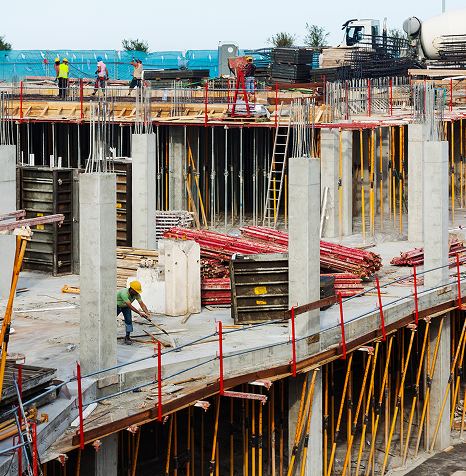
Real estate value is created long before the first tenant moves in. Decisions made during architectural design, engineering, procurement and construction influence maintenance costs, tenant experience, insurability, marketability and eventual resale value.
· Structural design and workmanship: Appropriate engineering, quality control and independent inspection reduce the likelihood of expensive defects and safety concerns.
· Drainage and waterproofing: Poor water management can turn an attractive development into a high-maintenance asset, particularly in flood-prone locations.
· Mechanical and electrical systems: Reliable power, water, ventilation and service access influence operational efficiency and tenant satisfaction.
· Functional planning: Adequate parking, circulation, natural light and usable floor areas can support rental appeal and efficient occupancy.
· Cost and programme discipline: A coordinated bill of quantities, procurement strategy and documented milestones help protect the development budget.
This is why investors assessing projects under construction should review more than the 3D render. Request designs, written specifications, evidence of required approvals, a credible programme and verifiable progress reports. For projects being developed directly, integrating design, quantity surveying and construction management can help reduce preventable coordination and cost risks.
6. Due Diligence: Protect the Capital Before Seeking Returns
In Nigeria, an attractive asking price is not a substitute for a verifiable legal interest in land. Ask an independent property lawyer to investigate the chain of title, survey and boundaries, encumbrances, litigation exposure and government acquisition status, and to identify the consent, stamping and registration steps relevant to the specific transaction.
The Land Use Act regulates rights of occupancy; section 22 addresses consent for the transfer of statutory rights of occupancy. A Certificate of Occupancy, deed or survey should never be treated as a stand-alone guarantee that the transaction is clean. The appropriate checks vary according to the property, state and transaction structure.
For a development investment, separately confirm planning and building-control approvals, the seller’s or developer’s capacity to transact, the signed contract, unit specifications, transfer conditions and project-funding arrangements. In Lagos, the relevant real-estate regulatory records can also be checked where applicable; professional registration and property-title verification are distinct exercises.
Investors should budget not just for purchase price but also for legal services, registration, applicable taxes, agency charges, insurance, utilities, repairs and an emergency reserve. An independent valuation, building inspection and financial review may be appropriate depending on the size and complexity of the deal.
7. Match the Property to the Investor
| Primary goal | Potential strategy | Core measure
| Stable cash flow | Completed residential rental | Net operating yield, vacancy
| Medium- to long-term growth | Well-vetted land or new development | Exit value, holding costs, title
| Active value creation | Build-to-sell or a structured JV | Development margin, IRR, programme
| Operating-business income | Serviced apartments or commercial asset | Occupancy, operating profit
This framework is illustrative; investor suitability also depends on capital availability, risk tolerance, management capacity and the ability to withstand delays or a less favourable market.
8. Seven Questions to Ask Before You Commit
· Who is the likely tenant or end-buyer, and what evidence confirms their ability to pay?
· Can the seller’s title and the project’s approvals be independently verified?
· What is the fully loaded acquisition or development cost, including contingency?
· What are the conservative net yield, downside scenario and break-even assumptions?
· What construction, maintenance or operational risks could weaken cash flow?
· Who is accountable for project execution, reporting and delivery milestones?
· How, when and at what cost could the investment be sold or refinanced?
Building Property Value With Realistic Projects
Successful property investment requires a combination of market judgement, credible development planning, sound engineering and disciplined project delivery. Realistic Projects brings together building design, construction and real estate services to help clients evaluate and develop properties with long-term performance in mind.
Whether the objective is acquiring an investment property, developing a residential building or assessing a new project, our approach begins with clarity on requirements, budget, technical feasibility and delivery expectations. Explore our property development and sales services or book a consultation to discuss an opportunity.
Frequently Asked Questions
Is real estate a good investment in Nigeria?
It can be, provided a property has verified title, demonstrable occupier demand, sensible pricing and a return profile that compensates for its risks. There is no guaranteed appreciation or rental yield.
What is the best way to invest in real estate in Nigeria?
There is no single best method. Completed rentals may suit income-focused investors; land banking can suit patient investors without immediate cash-flow needs; and development partnerships may suit investors prepared to manage execution risk.
How much money is needed to begin property investment?
The entry cost depends on the location, asset type, transaction structure and associated fees. Rather than choosing by headline price alone, assess the full cash commitment, operating reserve and any future payment obligations.
How do I verify a property before buying?
Use an independent solicitor to examine ownership, title, survey and legal issues. Where relevant, verify planning and construction approvals, arrange a site inspection and engage a valuer or engineer to review the asset.
What is the difference between rental yield and capital appreciation?
Rental yield measures income relative to invested capital, while capital appreciation measures any change in the property’s value. Appreciation is not realised profit until the asset is sold, after accounting for selling costs and relevant taxes.
Final Perspective
Investing in Nigerian real estate should be approached as a business decision, not a race to buy into the next popular location. The most defensible investments are those backed by realistic cash flows, independent verification, strong asset quality and a clearly defined exit strategy. When construction and investment decisions are made together, property is better positioned to retain value over time.