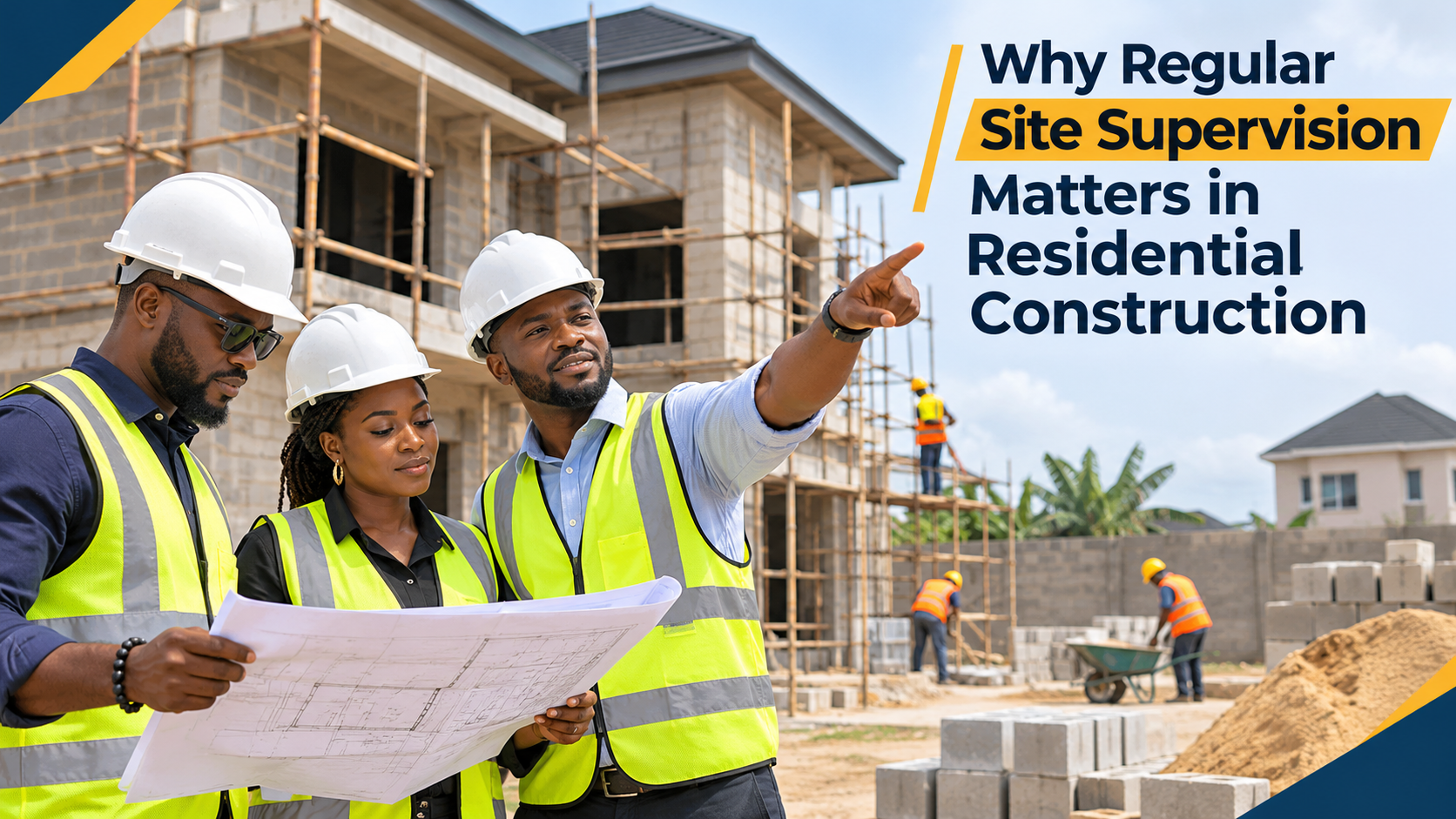
Why Regular Site Supervision Matters in Residential Construction
A practical guide to safer building, better workmanship, cost control and construction quality in Nigeria.
Building a home is one of the most significant financial investments most people will ever make. Beyond creating a comfortable living space, residential construction involves technical decisions, financial commitments, safety considerations, and the coordination of multiple professionals.
However, having a well-designed architectural plan, a detailed structural drawing, and an experienced contractor does not automatically guarantee a successful construction project.
The quality of the finished building depends largely on how effectively these plans are implemented on-site.
This is where regular site supervision becomes essential.
Every stage of residential construction, from foundation excavation to roofing and finishing, requires proper monitoring to ensure that construction activities meet approved designs, engineering specifications, quality standards, and project expectations.
Without effective supervision, seemingly minor errors can develop into significant structural problems, expensive repairs, construction delays, or long-term maintenance challenges.
Understanding the importance of site supervision can help homeowners and property developers make better decisions, protect their investments, and achieve safer, more durable buildings.
What Is Site Supervision in Residential Construction?
Site supervision is the continuous or regularly scheduled professional oversight of construction activities to ensure that work is executed according to approved drawings, engineering specifications, quality standards, safety requirements, and the agreed construction programme.
It involves monitoring workmanship, coordinating construction teams, inspecting materials, verifying technical details, and identifying potential problems before they affect the quality or progress of a building.
A competent site supervision team typically works alongside architects, structural engineers, registered builders, project managers, quantity surveyors, and other construction professionals.
Although these professionals have distinct responsibilities, their combined involvement helps ensure that the building is constructed safely and correctly.
For example, an architect may verify that room dimensions, door positions, and external finishes match the approved architectural drawings, while a structural engineer may inspect reinforcement arrangements, critical structural details, and other elements relevant to structural integrity.
The goal is not simply to observe workers but to ensure that construction activities consistently translate approved designs into the intended physical structure.
Why Is Regular Site Supervision Important?
Regular site supervision is important because it helps prevent construction errors, maintain material and workmanship standards, improve site safety, control avoidable costs, reduce delays, and ensure that completed work meets project requirements.
The following are some of the most important ways professional supervision contributes to successful residential construction.
1. It Helps Prevent Structural Defects and Construction Failures
One of the most critical responsibilities of site supervision is ensuring that structural elements are constructed according to the approved engineering design.
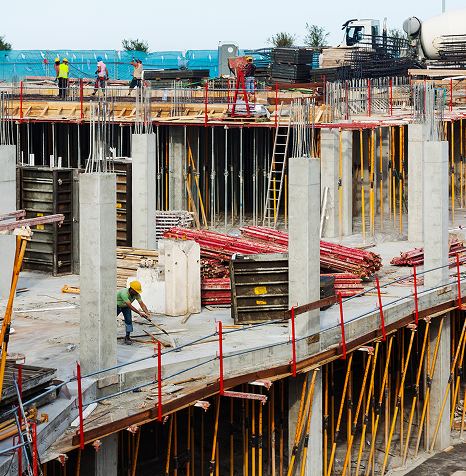
Residential buildings depend on properly designed and executed structural components, including foundations, columns, beams, slabs, and staircases.
Errors involving these components can compromise the performance and safety of the building.
For instance, improperly positioned reinforcement, inadequate concrete cover, incorrect structural dimensions, poor concrete compaction, or premature removal of formwork can affect structural performance.
Such defects may not be immediately visible after construction, especially once the affected elements have been concealed by concrete, plaster, or finishes.
Regular technical inspections help identify these issues at the stages when corrections are still practical.
Consider a typical reinforced concrete column.
Before casting, the supervising professional should verify that:
· The column dimensions correspond with the approved structural drawings.
· The reinforcement size, number, spacing, anchorage, and arrangement meet the design specifications.
· Reinforcement is appropriately secured and supported.
· The specified concrete cover is maintained using suitable spacers.
· The formwork is properly aligned, supported, and adequately secured.
· The required concrete quality and placement procedures are followed.
These checks are especially important because correcting reinforcement defects after concrete placement may require intrusive investigations and extensive remedial work.
Key takeaway: Structural safety begins with correct construction practices, supported by professional inspections at critical stages.
2. It Ensures Construction Follows Approved Architectural and Engineering Drawings
A common challenge in residential construction is the difference between what was designed and what is eventually built.
Architectural and structural drawings are technical documents that communicate the intended dimensions, layout, materials, and performance requirements of a building.
When workers interpret these drawings incorrectly, construction may deviate from the original design.
For example, errors may occur in:
· Room dimensions and internal layouts.
· Door and window positions.
· Staircase dimensions and configurations.
· Wall alignment and positioning.
· Floor levels and ceiling heights.
· Structural member sizes and locations.
· Plumbing and electrical service routes.
Some deviations may seem insignificant during construction but create major complications during subsequent stages.
A misplaced wall, for example, may affect furniture arrangements, plumbing installations, electrical layouts, or the building’s intended functionality.
Regular supervision provides an opportunity to compare ongoing construction with the approved drawings and resolve discrepancies before additional work is completed.
Where modifications are necessary, they should be properly reviewed and authorised by the relevant design professionals.
Construction teams should never assume that design changes are acceptable simply because they appear convenient on-site.
3. It Improves Material Quality and Workmanship
The durability of a residential building depends not only on the quality of its design but also on the materials and workmanship used during construction.
Even well-designed structures can experience premature deterioration if materials are substandard or installation procedures are poorly executed.
For instance, low-quality blocks, contaminated aggregates, inappropriate concrete mixtures, poorly installed waterproofing membranes, and defective plumbing materials can introduce problems that become expensive to correct.
Professional supervision helps establish and maintain quality-control procedures throughout construction.
Depending on the project, these may include:
· Material verification: Confirming that cement, reinforcement steel, blocks, aggregates, roofing materials, and other products comply with the approved specifications.
· Workmanship inspections: Checking that construction activities are performed using appropriate methods and acceptable workmanship standards.
· Quality testing: Arranging relevant material and construction tests, such as concrete workability and strength testing, where required by the project specifications.
· Installation checks: Verifying that waterproofing systems, electrical installations, plumbing networks, and finishing materials are correctly installed.
For concrete works, quality control should extend beyond the casting operation.
It should also include appropriate concrete handling, placement, compaction, curing, and testing procedures.
The American Concrete Institute’s inspection guidance similarly recognises the importance of inspections before, during, and after concrete placement.
The result of effective quality control is not merely a building that looks attractive at completion, but one whose materials and construction practices support its intended performance over time.
4. It Helps Prevent Costly Mistakes and Unnecessary Rework
One of the most overlooked financial benefits of regular site supervision is the reduction of avoidable construction expenses.
Construction errors often become more expensive to correct as a project progresses.
An incorrectly positioned plumbing pipe may require a relatively minor adjustment before wall plastering. However, discovering the same problem after tiling could mean breaking finished surfaces, replacing materials, and paying for additional labour.
The same principle applies to structural and architectural works.
Consider a situation where a staircase is constructed with incorrect dimensions.
If the problem is identified during setting out or formwork installation, corrections may be straightforward.
If discovered after concrete casting, the remedial work may become significantly more complicated and costly.
Regular supervision helps reduce these risks through early detection and timely corrective action.
It also supports better financial control by ensuring that:
· Materials are used for their intended purposes.
· Construction quantities are checked against approved requirements.
· Unauthorised changes are identified.
· Defective work is corrected before subsequent activities commence.
· Completed work is verified before payment recommendations are made.
Although professional site supervision adds a cost to the project, it can protect the overall construction budget by limiting unnecessary rework, material wastage, and preventable defects.
The cost of preventing an error is often considerably lower than the cost of correcting it after construction has progressed.
5. It Improves Construction Safety
Construction sites contain numerous safety hazards, including working at height, open excavations, moving equipment, electrical installations, exposed reinforcement, and temporary structural supports.
Without adequate supervision, unsafe practices may go unnoticed or become normalised.
A properly supervised construction site should have clear safety arrangements proportionate to the risks involved.
These may include:
· Appropriate personal protective equipment.
· Safe working platforms and access arrangements.
· Properly supported excavations and temporary works.
· Safe material storage and handling.
· Appropriate electrical safety measures.
· Worker safety briefings and task-specific instructions.
· Regular identification and correction of unsafe conditions.
Supervisors must also ensure that workers understand the methods required to complete their tasks safely.
The UK’s Health and Safety Executive identifies supervision as an important link between planning construction activities and ensuring that they are carried out correctly.
While site supervision cannot eliminate every construction risk, it supports the consistent implementation of appropriate safety measures.
6. It Improves Project Coordination and Reduces Delays
Residential construction involves several interdependent activities.
Architectural works, structural construction, electrical installations, plumbing, roofing, waterproofing, and finishing must be carefully coordinated.
Poor coordination can result in trade conflicts, repeated work, material shortages, and unnecessary delays.
For example, electrical conduits and plumbing sleeves may need to be positioned before particular concrete elements are cast.
Failure to coordinate these installations can result in avoidable modifications or damage to completed work.
Regular supervision helps maintain communication between the different professionals and trades.
The site supervision team can monitor progress against the construction programme, identify potential bottlenecks, and coordinate the sequence of activities.
It also helps ensure that critical decisions are taken at the appropriate time rather than after they have already affected the project.
A well-supervised site is therefore more likely to maintain an organised workflow and respond effectively to emerging construction challenges.
7. It Provides Accountability and Transparent Project Reporting
For many homeowners, especially those building in another city or country, one of the greatest challenges is knowing what is actually happening on-site.
Photographs and verbal assurances may offer some reassurance, but they do not always provide sufficient information about construction quality, expenditure, or project progress.
A structured supervision system creates a documented record of activities, inspections, decisions, and corrective actions.
A professional site report may include:
· Construction activities completed during the reporting period.
· Progress compared with the approved programme.
· Materials received and utilised.
· Quality inspections and test results.
· Technical challenges encountered.
· Safety observations.
· Approved variations and design clarifications.
· Photographs of completed and ongoing works.
· Outstanding issues, responsible personnel, and corrective-action deadlines.
This documentation improves accountability and gives homeowners greater visibility into the construction process.
It is particularly valuable for Nigerians in the diaspora who are managing residential building projects remotely.
With reliable reporting, clients can make informed decisions without relying entirely on occasional site photographs or informal updates.
8. It Supports Regulatory Compliance and Building Standards
Construction projects are subject to applicable planning approvals, building regulations, and professional requirements.
In Lagos State, for example, the Lagos State Building Control Agency (LASBCA) is responsible for building control functions, including inspection and certification at various construction stages.
LASBCA also emphasises the involvement of relevant construction professionals and adherence to approved development permits.
Importantly, routine supervision by a contractor or consultant does not replace inspections carried out by the statutory building control authority.
Both processes serve important but different functions.
Professional site supervision focuses on the ongoing technical, quality, safety, and coordination requirements of the project, while statutory inspections assess compliance with applicable regulatory requirements.
Homeowners should therefore engage qualified professionals and confirm the inspection and certification requirements applicable to their project location.
For more information, consult the Lagos State Building Control Agency: https://lasbca.lagosstate.gov.ng/faq/
Critical Stages of Residential Construction That Require Supervision
Although supervision is important throughout construction, some activities require particularly close monitoring because errors may become difficult to detect or correct afterwards.
Construction stage | Important supervision activities
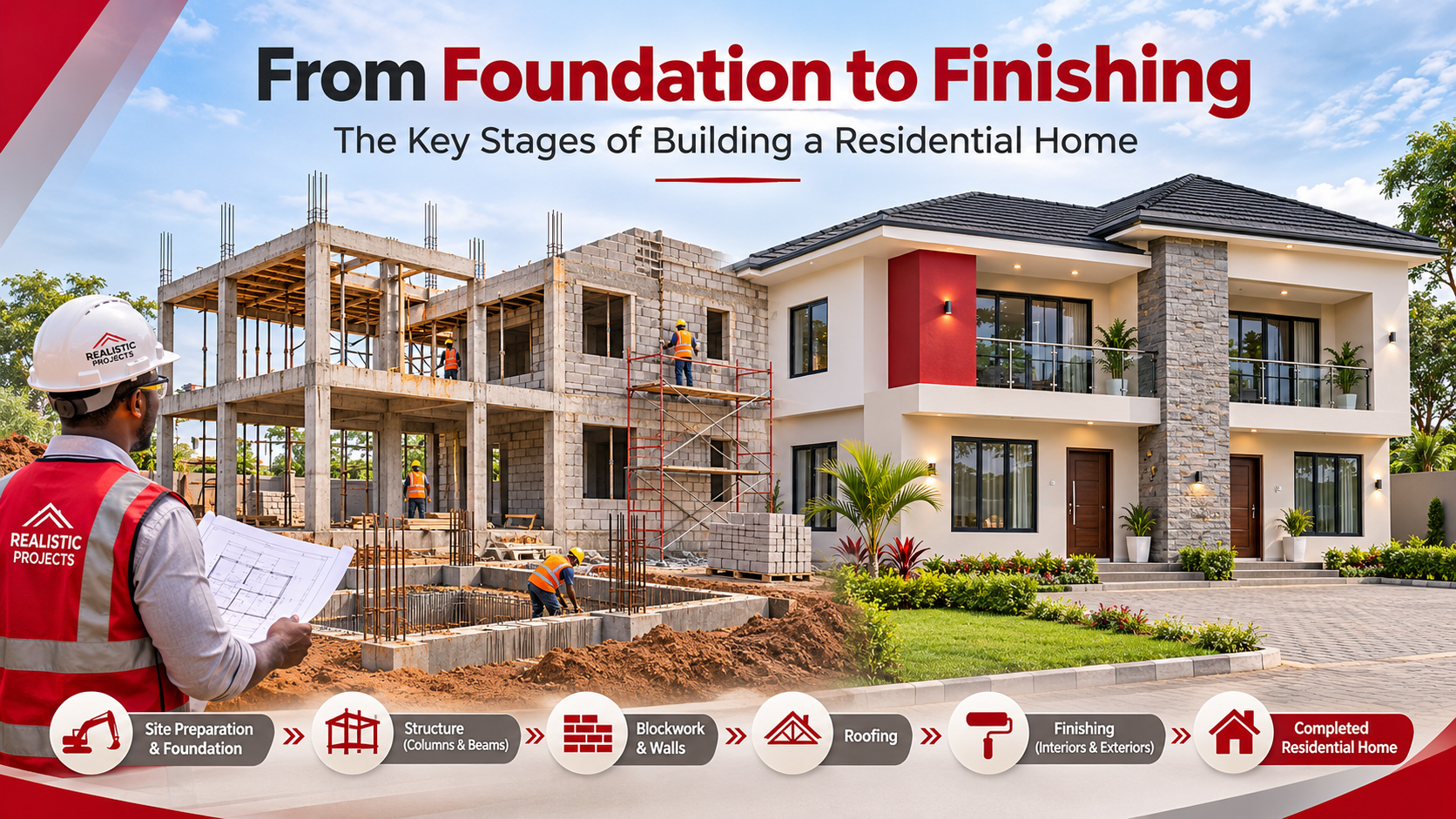
Site preparation and setting out | Check site boundaries, building positioning, dimensions, levels, and compliance with approved layouts.
Foundation works | Verify excavation conditions, founding levels, reinforcement, formwork, and concrete placement in accordance with engineering requirements.
Columns, beams, and slabs | Inspect reinforcement, dimensions, cover, formwork, temporary supports, concrete placement, and curing.
Blockwork and wall construction | Check wall alignment, dimensions, openings, materials, and workmanship.
Roofing works | Inspect structural connections, alignment, roof covering installation, drainage provisions, and waterproofing details.
Mechanical and electrical installations | Verify the routing, positioning, coordination, and appropriate testing of plumbing and electrical systems.
Finishing works | Review plastering, tiling, doors, windows, painting, waterproofing, and workmanship quality.
Project completion and handover | Conduct final inspections, review outstanding defects, verify required documentation, and coordinate testing and commissioning.
The exact inspection requirements should be determined by the project’s complexity, approved documents, applicable regulations, and the supervising professionals.
How Often Should a Residential Construction Site Be Supervised?
There is no single inspection frequency that is suitable for every residential project.
The appropriate level of supervision depends on factors such as building size, construction complexity, project risks, workforce competence, and the type of work being executed.
For active residential construction, a practical arrangement is to maintain a competent person responsible for day-to-day site oversight, supported by scheduled inspections from the relevant professionals.
However, critical activities may require direct professional attendance rather than relying solely on routine inspections.
Examples include:
· Before concrete casting: Reinforcement, formwork, supports, embedments, and other relevant elements should be inspected before the pour is authorised.
· During concrete placement: The appropriate personnel should monitor concrete quality, handling, placement, compaction, and related procedures.
· During critical structural operations: Specialist inspections may be required for activities such as piling, foundation construction, temporary works, and structural modifications.
· Before concealing installations: Plumbing pipes, electrical conduits, waterproofing systems, and similar installations should be inspected and tested as appropriate before being covered.
· At project milestones: Progress, quality, programme performance, and outstanding construction issues should be formally reviewed.
In practice, supervision should be risk-based and continuous enough to identify problems before they become embedded in the building.
A single weekly visit cannot substitute for direct oversight of a critical activity taking place between inspections.
Site Supervision vs. Site Inspection: What Is the Difference?
Although both terms are frequently used interchangeably, site supervision and site inspection are not exactly the same.
Site supervision is the broader process of monitoring, managing, coordinating, and controlling ongoing construction activities.
Site inspection is a more focused assessment of particular work, materials, installations, or construction stages to verify compliance with specified requirements.
For example, monitoring daily construction activities, organising artisans, coordinating material deliveries, and tracking progress form part of site supervision.
Checking reinforcement in a beam before concrete placement is a specific inspection activity.
Both functions are necessary, but neither should be mistaken for an automatic guarantee of construction quality.
The effectiveness of supervision ultimately depends on professional competence, proper procedures, documentation, and timely corrective action.
Who Should Supervise the Construction of a Residential Building?
Residential construction should be managed and supervised by appropriately qualified professionals with responsibilities suited to the nature of the work.
In Nigeria, the National Building Code recognises the role of registered builders in managing building production and supervising artisans and tradespeople.
Other professionals contribute their specialist expertise.
These include:
· Registered builders: Oversee building production processes, workmanship, construction methodology, and coordination of site activities.
· Architects: Monitor conformity with architectural drawings, spatial arrangements, finishes, and approved design requirements.
· Structural engineers: Provide technical oversight on structural design implementation, structural modifications, and critical structural inspections.
· Mechanical and electrical engineers: Oversee relevant building services installations and specialist technical requirements.
· Quantity surveyors: Support cost management, quantity verification, valuations, and financial control.
· Project managers: Coordinate project delivery, timelines, communication, responsibilities, and overall project performance.
On smaller projects, some coordination responsibilities may be combined, provided the individuals involved are competent and professionally authorised to perform those functions.
The important consideration is that specialist technical decisions should remain within the responsibility of appropriately qualified professionals.
Warning Signs That a Residential Construction Project Is Poorly Supervised
Homeowners should be concerned when construction activities repeatedly proceed without proper technical checks or documentation.
Some warning signs include:
1. Workers relying on assumptions instead of approved drawings. Critical dimensions and construction details should not be determined through guesswork.
2. Concrete casting without necessary pre-pour inspections. Reinforcement and other concealed elements should be verified before concrete placement.
3. Frequent changes without documented approval. Design changes should be reviewed and approved through the appropriate process.
4. Repeated demolition and rework. Persistent corrections may indicate inadequate planning, supervision, or quality control.
5. Poor communication and missing progress reports. Clients should have access to reliable information about project progress and outstanding issues.
6. Unexplained material substitutions. Changes to specified products or materials should undergo the required technical and commercial approvals.
7. Visible safety concerns. Unsafe access arrangements, poorly supported temporary works, and uncontrolled hazards should be promptly addressed.
8. No clear responsibility for quality checks. Every project should have an established process for identifying, documenting, and resolving defects.
The presence of one problem does not necessarily mean the entire project is defective. However, repeated warning signs should prompt a professional review.
The Importance of Site Supervision for Nigerians Building from Abroad
For Nigerians living overseas, managing residential construction remotely presents additional challenges.
Distance can make it difficult to verify progress, assess workmanship, monitor costs, or respond quickly to technical issues.
This makes structured professional supervision particularly valuable.
A reliable arrangement should provide regular written reports, photographic evidence, documented inspections, records of approved changes, and clear procedures for raising and resolving concerns.
Where appropriate, independent technical inspections can provide an additional layer of assurance.
Homeowners should also ensure that payment milestones are connected to clearly defined contractual requirements and properly verified work.
Rather than relying solely on personal relationships or informal promises, a documented supervision process helps establish accountability throughout construction.
Frequently Asked Questions About Residential Construction Site Supervision
Is site supervision necessary for a small residential building?
Yes. Even small residential buildings require appropriate technical oversight. Foundations, structural components, building services, and finishing works must be properly executed regardless of building size. The level of supervision should reflect the complexity and risks of the project.
Can I supervise my own building project?
A homeowner can monitor progress, review reports, and participate in project decisions. However, technical inspections and specialist construction decisions should be handled by appropriately qualified professionals. Personal site visits do not replace professional supervision.
What happens when a construction site is not properly supervised?
Poor supervision increases the risk of defective workmanship, construction errors, safety incidents, material wastage, delays, cost overruns, and non-compliance with approved designs or regulatory requirements. The severity of these consequences depends on the nature of the errors and whether they are identified and corrected.
Does hiring an experienced contractor eliminate the need for supervision?
No. An experienced contractor is valuable, but construction still requires suitable internal supervision, quality-control procedures, professional inspections, and client-side oversight where appropriate. An independent consultant may also be appointed to verify aspects of the contractor’s work.
Can regular site supervision reduce construction costs?
Yes, it can help reduce avoidable expenses by detecting errors early, limiting unnecessary rework, improving material utilisation, and supporting better project coordination. However, the financial benefit will vary depending on the project and the effectiveness of the supervision process.
What should homeowners receive from their site supervision team?
A well-managed supervision arrangement should provide progress reports, inspection records, photographic updates, records of construction challenges, approved variations, quality-control documentation, and confirmation that identified defects have been appropriately addressed.
What is the difference between site supervision and government building inspection in Lagos?
Site supervision involves ongoing professional oversight of construction activities. Government building inspections, undertaken by the relevant regulatory authorities such as LASBCA, focus on compliance with applicable building regulations, permits, and statutory requirements. Both processes are important, and private supervision should not be treated as a substitute for required government inspections.
Conclusion: Quality Construction Requires Consistent Oversight
Successful residential construction is not determined solely by attractive architectural designs, expensive materials, or the speed of execution.
It depends on how effectively the construction process is planned, coordinated, monitored, and controlled.
Regular site supervision provides a practical means of protecting building quality, improving safety, managing resources, reducing avoidable errors, and ensuring that construction activities remain aligned with approved designs.
For homeowners, it offers greater confidence that their investment is being managed responsibly.
For property developers, it supports more predictable project delivery and stronger quality assurance.
Ultimately, a building is only as reliable as the quality of the decisions, materials, and workmanship that go into its construction.
And those decisions require consistent professional oversight.
Build Smart. Build with Realistic.
At Realistic Projects Limited, we recognise that successful construction requires more than a good design. It requires proper planning, technical coordination, professional execution, and attention to detail throughout the building process.
Whether you are planning your first home, developing residential apartments, or managing a construction project from abroad, engaging qualified construction professionals is an important step towards protecting your investment.
Planning a residential construction project?
Visit www.realisticprojects.com to explore our construction and design services and learn how professional project delivery can support your building goals.